


🥩Professional Spring-Loaded Meat Tenderizer
🥩Professional Spring-Loaded Meat Tenderizer
🥩 48 Precision Blades
💧 Supports Deeper Marinade Contact
↕️ Automatic Spring Rebound
✋ Comfortable Wide-Grip Handle
🍽️ For Beef, Pork, Chicken & More
Couldn't load pickup availability

🥩Professional Spring-Loaded Meat Tenderizer


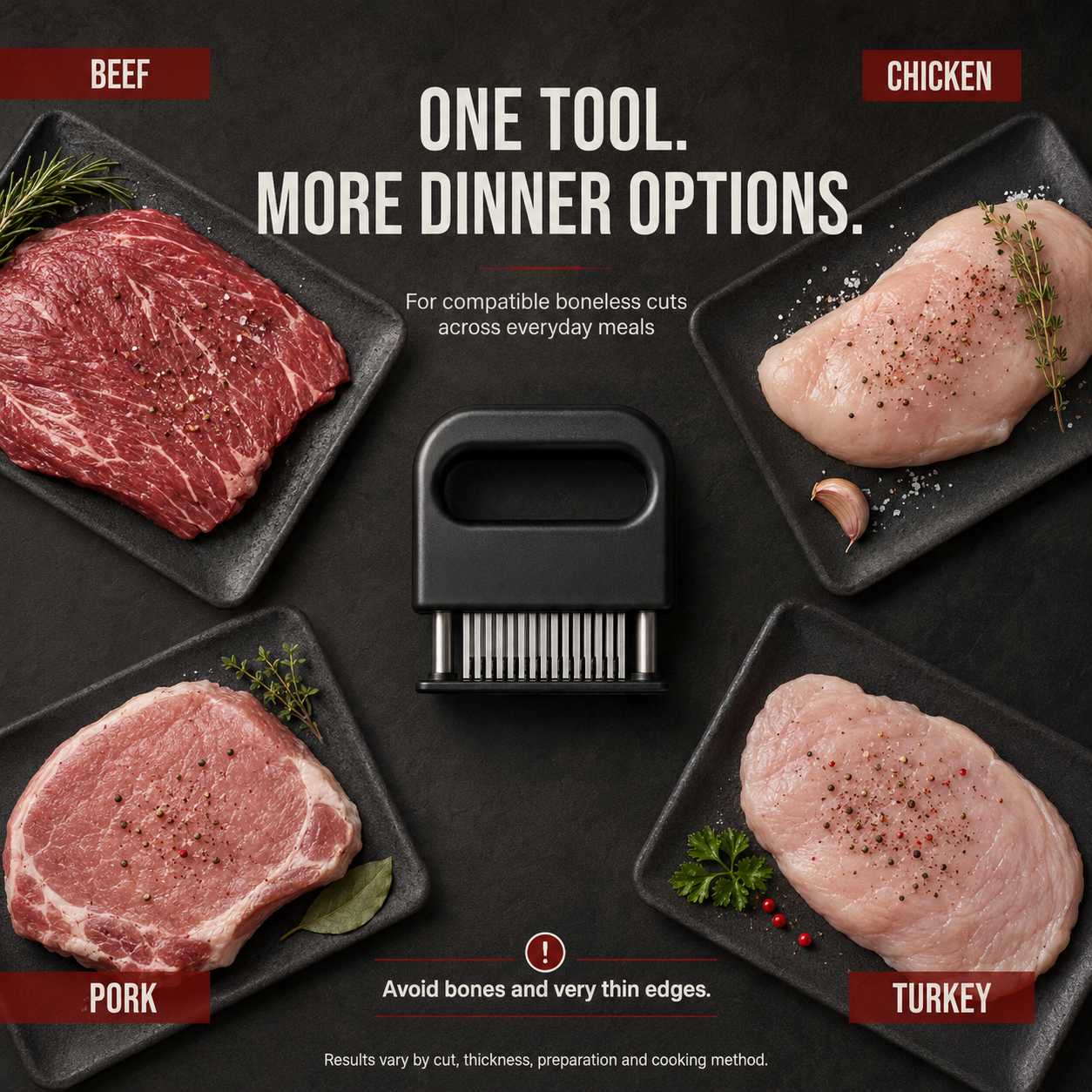
🍖Stop Pounding. Start Pressing.🔪
Said Tougher Cuts Were Easier To Prepare
Said Marinades Spread More Evenly Across The Meat
Said The Wide Handle Felt Comfortable To Use
Based on customer feedback after 4 weeks of consistent use.


Flavor Beyond The Surface
Thick cuts can leave marinades concentrated mainly on the outside, especially when preparation time is limited.
The precision blades create small channels across the meat, helping seasoning and marinade contact a larger internal surface area. This supports more evenly seasoned results without using a bulky marinade injector.

Controlled, Comfortable Tenderizing
 Spring-Loaded Rebound : The internal spring helps return the blade assembly after each downward press.
 Protective Base Baffle : The surrounding base helps cover the blades when the tool is not being pressed against food.
 Wide One-Hand Grip : The large handle distributes pressure across the palm for more controlled meal preparation.

Maximum Hygiene: The "Anti- Bacteria" Design
Traditional wooden mallets or textured metal hammers have deep grooves that trap bacteria and are nearly impossible to sanitize. Our tenderizer is built with non-porous, food-grade materials. The needles are easily accessible for cleaning, and the unit comes with a specialized brush to ensure every millimeter is spotless. It won't absorb odors, and it won't rust.
DINNER PREP IN 3 SIMPLE STEPS
-
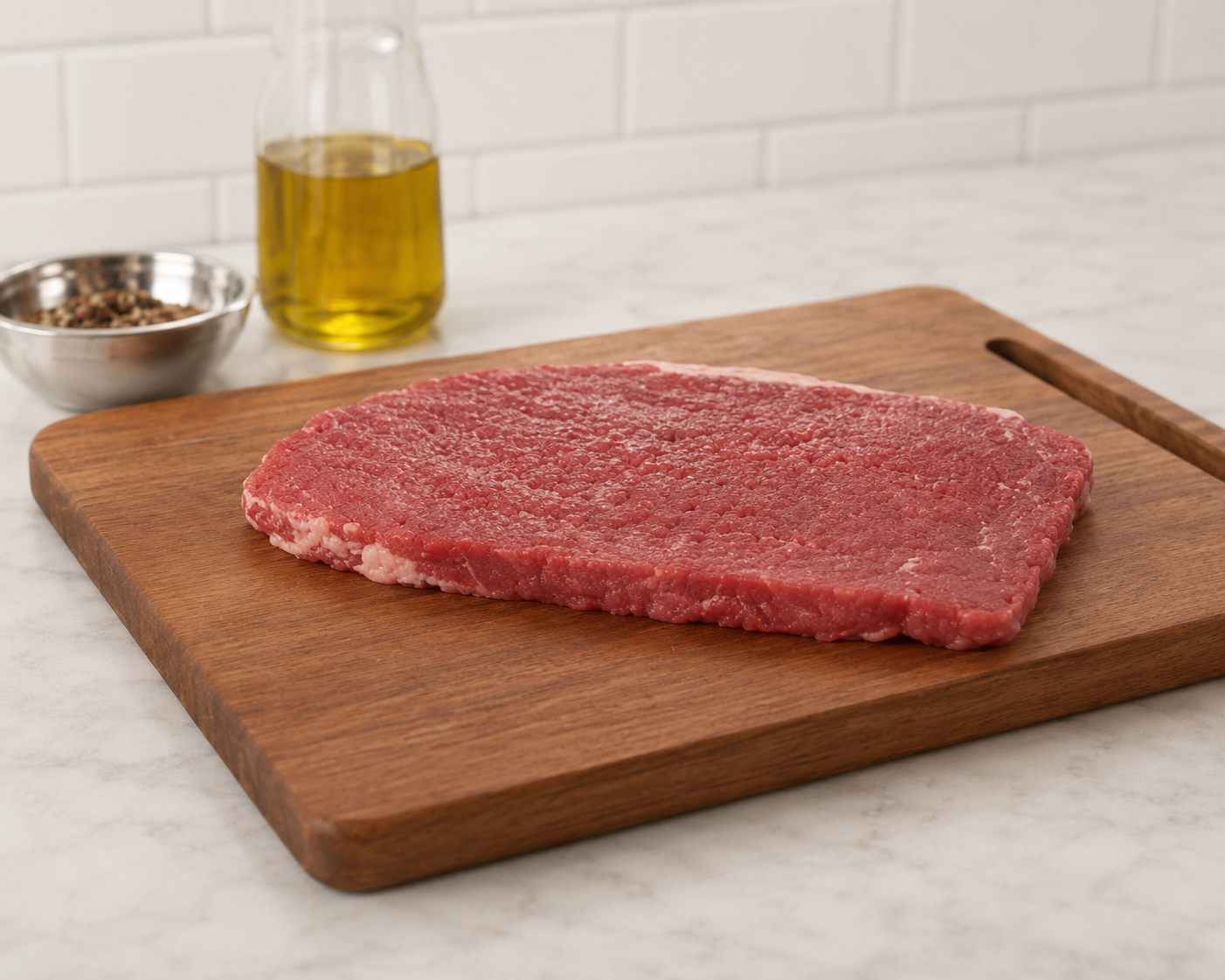
STEP 1 PLACE
Set safely thawed meat on a stable cutting board
-
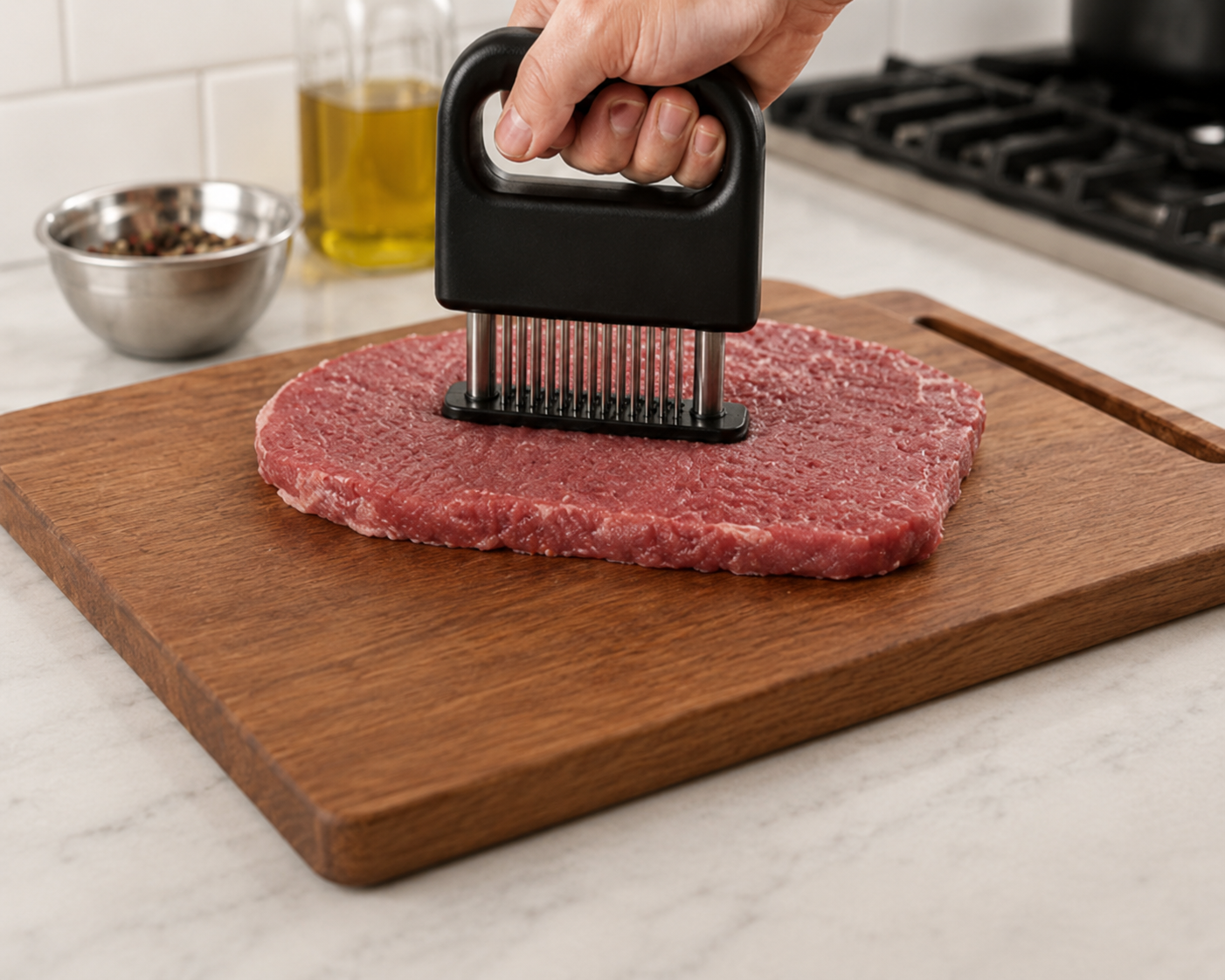
STEP 2 PRESS
Press evenly across the surface
-
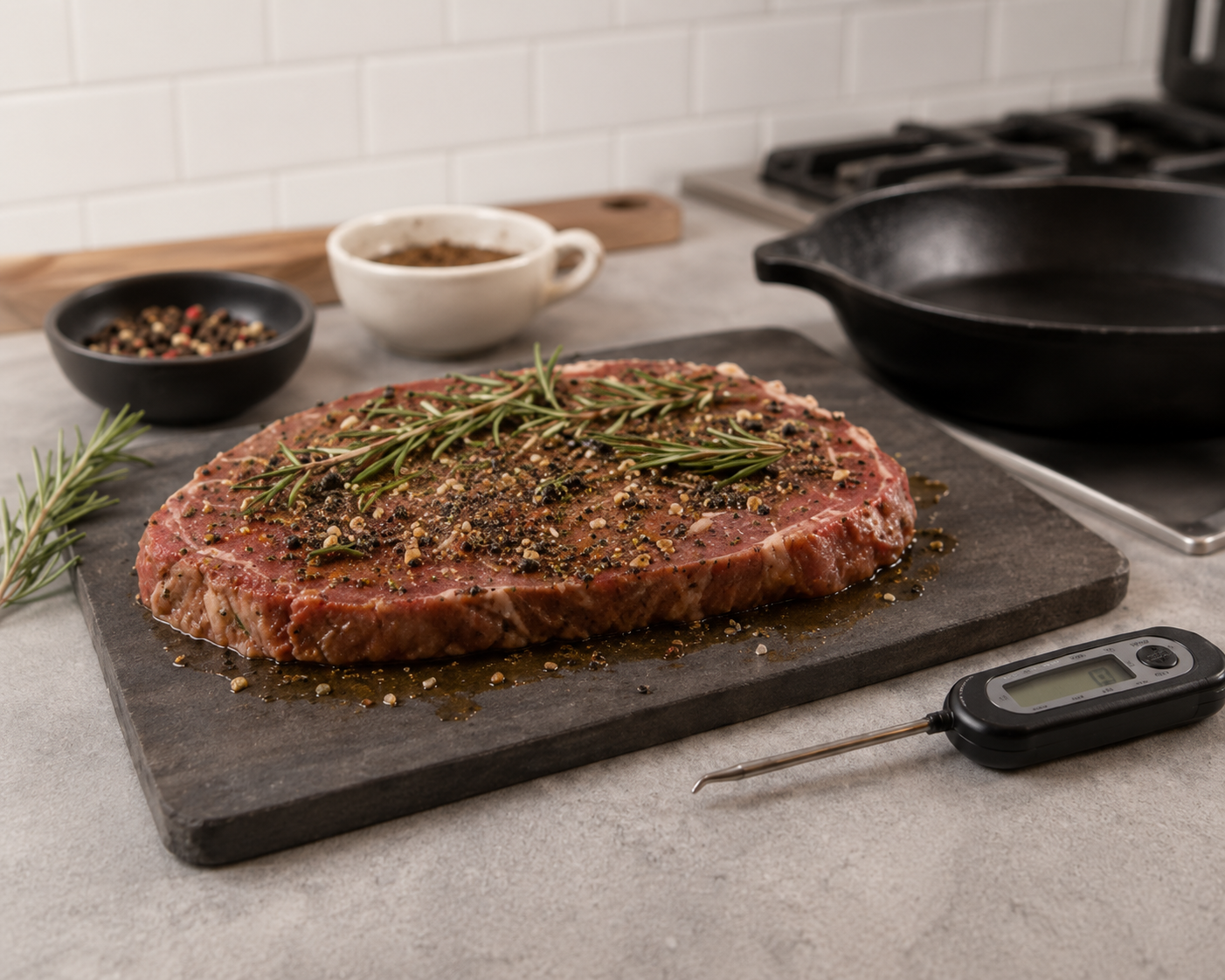
STEP 3 SEASON & COOK
Add marinade and cook to a safe temperature
Loved by 10,000+ customers
Your Questions, Answered
Does It Turn Every Tough Cut Into Filet Mignon?
Does It Turn Every Tough Cut Into Filet Mignon?
No tool can make every cut identical to filet mignon. It physically separates some dense muscle fibers and creates small channels, which may help compatible cuts cook with a more tender, evenly seasoned texture.
Can It Be Used On Frozen Meat?
Can It Be Used On Frozen Meat?
For safer, more controlled use, thaw meat according to food-safety guidance before tenderizing. Do not force the blades into rock-hard frozen meat, bones or other rigid surfaces.
Will It Make Meat Cook Faster?
Will It Make Meat Cook Faster?
The channels may allow heat to move through the meat more evenly, but cooking time depends on the cut, thickness, starting temperature and cooking method. Always use a food thermometer rather than relying only on time.
How Should It Be Cleaned?
How Should It Be Cleaned?
Rinse promptly after use so meat residue does not dry around the blades. Carefully hand wash with warm water and dish soap, keeping fingers away from the sharp points. Dry thoroughly before storage.